

At the age of thirty-one, I had learned how to swim.
Since childhood, I had watched enviously, from the sides of pools and shores of beaches, others partaking in the wonder of swimming. On my last day of school, before my parents and I moved from England to Bangladesh, it had been announced that my year, my friends and classmates, would soon begin swimming lessons at the local public pool. My cousins, who were two and four years older than myself and had gone to the same school, had undertaken this rite of passage. The start of swimming lessons seemed to me so mature, so grown up – leaving the parameters of our school, adopting a whole new code of conduct required to cross roads and abide by the rules of the pool, the responsibility for one’s own swimsuit, and of course, the resultant ability to swim. The knowledge that this was not something that would happen for me made leaving all the more bittersweet. I was six years old at the time, and there was greater emphasis on the bitter.
In Dhaka, where we settled, it was not uncommon for the children of the moneyed to take swimming lessons at the Pan Pacific Sonargaon Hotel. I passed by it almost daily, twice a day, when my father drove me to and from school, and on weekends, when we went to visit my grandparents. It was a palatial structure, and at certain times of day appeared pink in colour. We were not the moneyed sort, and throughout my life I was never left wanting, regardless of whether times were ample or lean, yet this one unfulfilled desire, and how intensely I desired it, provoked in me a deep sense of guilt and shame. There had been a time my parents had hoped to send me to swimming lessons at the hotel, but the cost and logistics had proved to be prohibitive, and I acted like I couldn’t care less, that this was furthest from what I had wanted most. In secrecy, I yearned.
Before I was thirty-one and had learned how to swim, I fantasized about entering a body of water and my bones and muscles innately filling with the knowledge of swimming, and I would go further and further, no surface for my feet to touch, and I could go under and be entirely encased by the cool blue of water. However, every time I waded into the water, at a certain point my body would seize with fear. It had no innate knowledge. Just float, others around me would goad, but I had no clue how to. In water, my body felt dense, the heaviest matter known, and surely I would sink. Many have said to me that in order to float, I just needed to trust the water, believe that it would buoy me, but how could I do so when what I trusted least was my body, and had almost no belief in it.
For almost as long as I had wanted to learn how to swim, I had very little faith in my body. As a child, I hovered in the vicinity of what adults perceived as fat, my body a symbol of unruliness that invited criticism and cruelty. Publicly I was proud; privately, I hurt. When I learned that the opposite of freedom, or unruliness, was control, I achieved a controlled, disorderly thinness. No amount of validation that followed restored confidence or esteem within myself because I was so starved from denial. I knew that if I replaced the control with faith, I would be unable to please those who had been so disturbed by my softness. It seemed better to please others than to care for and love myself.
Annoyed by urgings to just float and my inability to make others understand that it was not as simple to just float, as I had once done as a child, I pretended to be content at the side or by the shore, that to be knee deep in the cool blue was what I had wanted all along. But standing in the water, I fantasized about diving under waves, letting go, and believing that when needed, I could come back to myself.
The summer I learned how to swim, my husband and I rented a house for a month outside of the city that had a swimming pool. Guests visited frequently and were prone to shouting just float before gliding through the water with a flourish, and if they weren’t our friends, I would have absolutely loathed them. In time, the month had almost passed us by and I hadn’t still found the fortitude and patience I needed to figure out this floating business. A few days before we had to return to the city, I came across a brief video by a no-nonsense Frenchman on the mechanics of floating, the first and really only tip being to fill the lungs, to inhale deeply. It was so simple, yet something virtually everyone who insisted I just float had neglected to mention. This preliminary step was vital, because for as much as I loved the water, I feared it, and so my body instinctually contracted, my breath withheld.
Over several hours, I practiced just breathing while in the water, first standing in the shallow end and then further in, to where my shoulders were submerged, determined to physically understand the correlation between breathing in deeply and being able to just float. I held on to the edge of the pool while doing so, over time from loosening my grip, to gently resting my fingers against the warm and rough surface, until eventually I let go. For so long I had not felt safe in my body, suspicious of it rather than considering that despite all I had put it through, it continued to support me. One meaningful breath was all that was required to protect my being, and I could finally just float.
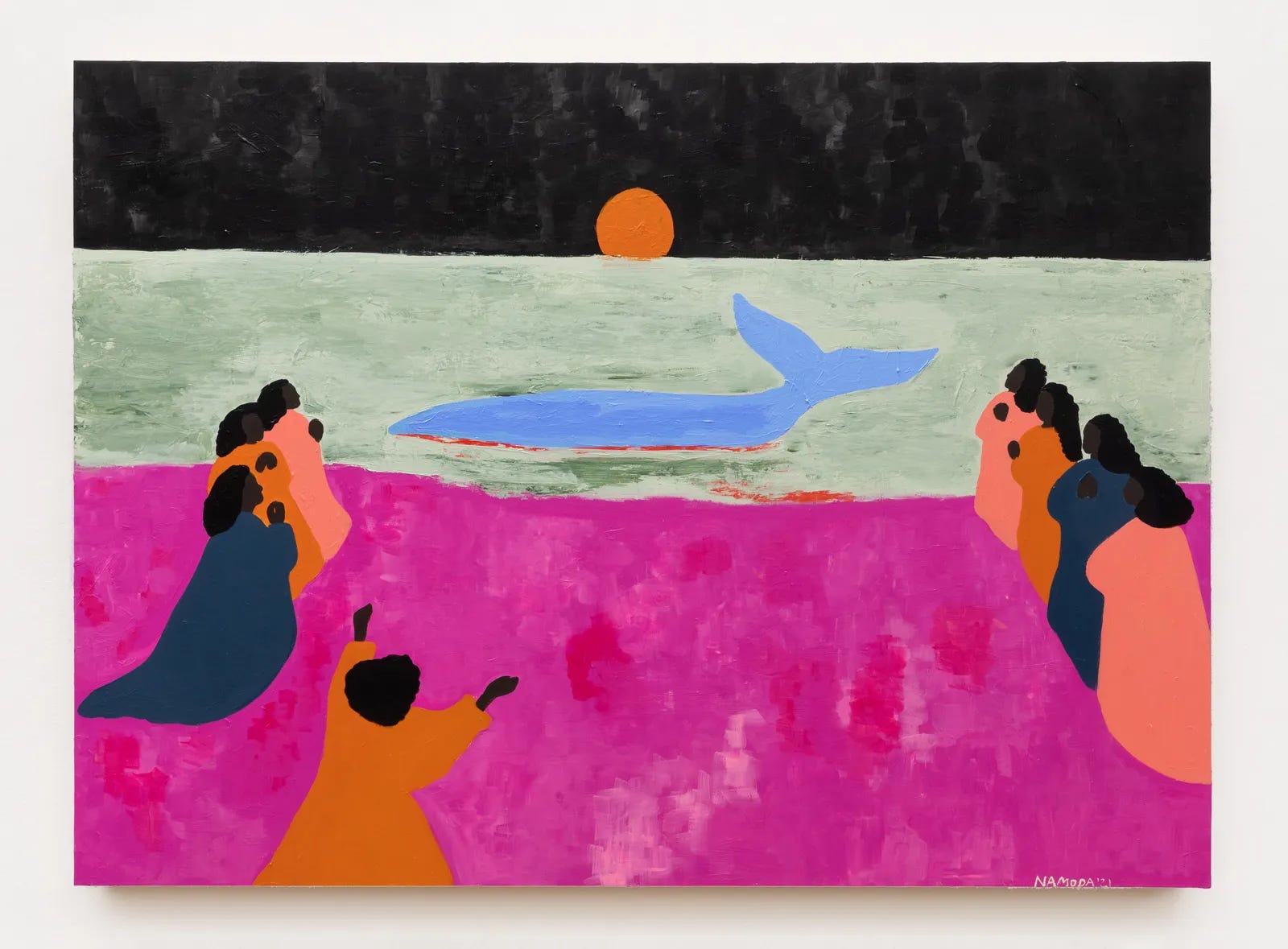
At the start of this summer, I was in the south of Italy for a few days and impatient to swim upon arrival. On our first day, my husband and I traveled to a small beach with a shore of smooth and sharp pebbles, families with young children to our left and right. The water was cool and tranquil, and felt incredible to the heat trap that had become my pregnant state. We had chosen this beach specifically because it would not be too physically challenging for me, yet in the calm, I now wanted a challenge. I wanted to feel the push and pull of the waves, to feel the thrill of holding my own against the current.
On our next beach expedition, we were recommended a cove with ample sunbeds and umbrellas and close proximity to sustenance – ideal for signora, that’s me – and an undisturbed vast expanse of pristine blue water that seemed infinite. After a steep drive down to the cove and settling on a spot on a cluster of rocks, I couldn’t wait to get in. The sun was high and the sea looked all the more enticing. We studied the seasoned Italians approaching the water, in hopes of not making total fools of ourselves, and saw that some tentatively stepped in, while others stood back. Those who made it waist-deep were quickly overcome by the volatility of the waves. I grew alarmed.
After a little while, we walked down to the water to give it a try ourselves. There were people clustered at its entrance, and only a handful were further out in the water. I didn’t enter the water but instead got pulled in, my feet losing contact with the flat smooth rock they were perched on before I had prepared to let go. I was caught in an undertow and could feel myself being drawn towards the rocks. My mind flooded with images of my body being thrown against their hard edges, and what would come of the life growing inside me. I had been looking forward to the challenge of a vigorous swim; I hadn’t expected, there in the deep blue sea, to be paralyzed by the fear of potential loss that had gripped me in the early months of my pregnancy.
From the moment I received my infertility diagnosis, my mind had rewired what I took for granted, what I thought was normal and natural as no longer so. I would never be able to conceive naturally, no number of holidays and relaxation techniques and going with the flow and not putting stress on myself, as I had been advised, would change the order of things. For the first time since I had learned to swim, I felt I could no longer trust my body. It had made itself an adversary from which there was no escape. After the first failed round of IVF, I was convinced being a mother was not in the cards for me. When the second round worked, I found it impossible to breathe during the first few months. And here I was, once again, not so far from my due date, struggling to keep my head above water, terrified by the thought of loss.
After making my way to a safer place where I could tread water (my apologies to the gentleman whose bottom I kept accidentally grazing), my mind continued to feel ill at ease. I was upset with myself for becoming so terrified, for losing faith in my abilities, and the sense of fearlessness in the water I’d grown accustomed to ever since I had learned to just float. It occurred to me that for some time to come, it would not be so easy to simply let go. I wanted to swim further out, to push myself beyond what I was now capable of, but my fear, and this life I was now responsible for, kept me close to the shore. In the weeks since, when I have thought of the combination of anger, frustration, desire, and terror I felt in that moment, and in moments since that have tested my new limits, I have wondered if this is something of a metaphor for motherhood.
Later that afternoon, my husband asked if I wanted to have one last go before we headed back to our hotel, soon back home and then to a new life, and we walked back down to the water. The water had grown more volatile, those emerging from it doing so on their hands and knees so as to resist the pull. My husband pushed back into it, and I walked in until I was waist-deep in water, my toes firmly gripping onto the stones beneath. This was as far as I could go for now.
I’m loving these personal essays of yours. So beautifully written! I grew up with a deep respect of the sea having a Danish mother who ignited the fear of the rough currents (to be fair both my cousins were pulled under in the North Sea and survived!) and despite being a capable swimmer I still don’t feel strong enough when in the sea. Yet today I dived under a big rough wave and it felt like an accomplishment. Baby steps. We’re all going at our own pace xx
What a beautiful post and you write amazing.