

Having spent most of my childhood in a country through which the Tropic of Cancer runs right through, you could say I’ve gained some insight into dressing for hot weather. When we were treated to winters in Bangladesh, that is, a handful of mild days in January, I relished throwing a shawl over my shoulders or putting on a cardigan for the sake of the variety it introduced to my wardrobe. Heat was so ubiquitous that one could almost never identify a hot day from a very hot day.
Architecturally, the homes I grew up in – my grandparents’, my family’s apartment – were designed with the local climate in mind. Like many middle class homes, our home had terrazzo floors, which meant that on the hottest days or whenever the power grid failed, which was often, laying down on the floors offered respite. Rooms were outfitted with ceiling fans. My parents were very conscious about energy usage and its costs, and the only room that had an AC unit was mine. I developed asthma soon after birth and my parents were constantly terrified that I would run out of air. Through parental logic, they determined that I deserved the AC unit most (thanks Mum and Dad!). After almost ten years without one, when I was in my late teens, my parents eventually relented and installed one in their bedroom.
The AC was not, however, something to be used with abandon. It stayed off most of the day, and at night it was usually run for an hour or so before bedtime, then the fan was turned on to circulate the air. Power outages meant that the AC would turn off on its own anyway, and as a child I didn’t like the thought of my parents doing without while I slept in comfort. On unbearably hot nights, when electricity was nowhere in sight, a thin mattress was rolled out and we would sleep on the floor.
Even now, living in America, the land of air conditioning, my childhood awareness of when and how the AC was used still lingers. It frustrates me when people set their thermostats to temperatures that require wearing layers in the dead of summer, how their individual comfort outweighs the costs. When traveling in countries where it is not typical to have ACs, such as Italy or the UK, whenever I am struck with the temptation to turn the hotel thermostat down to Arctic levels – it’s on their dime after all, goes the rationale – I have to remind myself that I am a guest, and that I have to be mindful of where I am.
In Dhaka, how one dressed, in what fabrics, was also crucial to staying cool, or at least to keep from melting into a puddle. On trips to fabric markets with my mother to buy materials for clothes that we would then have sewn according to our measurements and preferences – a practice so common in Bangladesh, but which remains what luxury means to me – I learned invaluable lessons on what to wear and what was asking for my own doom. Satin was total madness, silk and chiffon allowed for more air but could still stifle, and nothing could keep cool quite like cotton. We used voile to make slips and chemises, and lightweight lawn for shalwar kameezes, dresses, and to satisfy my teenage passion for babydoll tops, which in retrospect, would have now been ideal for my pregnant state.
Something that confounds me each year when designers launch their spring and summer collections is how very little can actually be worn in the summertime. Satin dresses. Wool jackets. Polyester tops. Great if one is spending summer in Antartica or New Zealand, but less than ideal if not. It’s apparent why fast fashion brands choose synthetics over cotton: the former is cheaper to produce, and these companies seek only to increase profit margins. When mid-range brands – where starting prices easily start at $250 – take this route, one wonders. At the luxury level, the mind reels. Increasingly, luxury has very little to do with the quality of fabrics, of their ability to keep cool in the summer and provide warmth in the winter.
When I was twenty years old and briefly lived in Maryland, I found a bottle-green cotton dress at a thrift store I used to frequent. It was sleeveless and had a full skirt, the effect achieved with several layers of voile, a girlish collar and a matching belt, and had a distinctly 50s silhouette. I wore it almost non-stop in the sweltering summers, favoring its airiness over synthetic tops I’d bought from stores I could afford at the time, like Forever21 and H&M. I became increasingly interested in shopping secondhand when I realized that I had a better chance of finding cottons and linens – fabrics that would better serve me in the heat – than what I could find at fast fashion retailers. Most of my closet now consists of secondhand pieces, and what I buy brand new has to serve me very well.
Currently, I’m in my third trimester during an uncomfortably warm and humid June in New York. This means my hands and feet often begin swelling as soon as I wake up. The heat feels hotter and nothing but the most breathable fabrics will do, not even for the sake of fashion. My Pleats Please pieces, a pregnancy godsend, just won’t do anymore.
Thankfully, over the years I’ve learned of small brands who do understand the importance in the materials they use, such as Eka, Labo.Art, Injiri, Apuntob, Egg, Runaway Bicycle, and Album di Famiglia, to name a few. Other labels that have kept me from spiraling into a heat-induced pregnant-lady mania are Marni (from the Consuelo Castiglioni years, whose babydoll tops and tunics inspired my teenage ones), Dries Van Noten, and Comme des Garçons. Stores like Rennes and La Garçonne continue to introduce me to designers who make clothes that are actually conducive to wearing in the summertime heat, and Etsy remains a treasure trove of wispy cottons and linens, from Edwardian petticoats to Marimekko tent dresses.
Below are some outfits I’ve worn over the past two weeks and several hot flashes, and which have kept me cool, moderately calm, and somewhat collected. Consider this a trial run – with New York facing extreme temperatures next week, hopefully they’ll withstand the test of blistering heat!
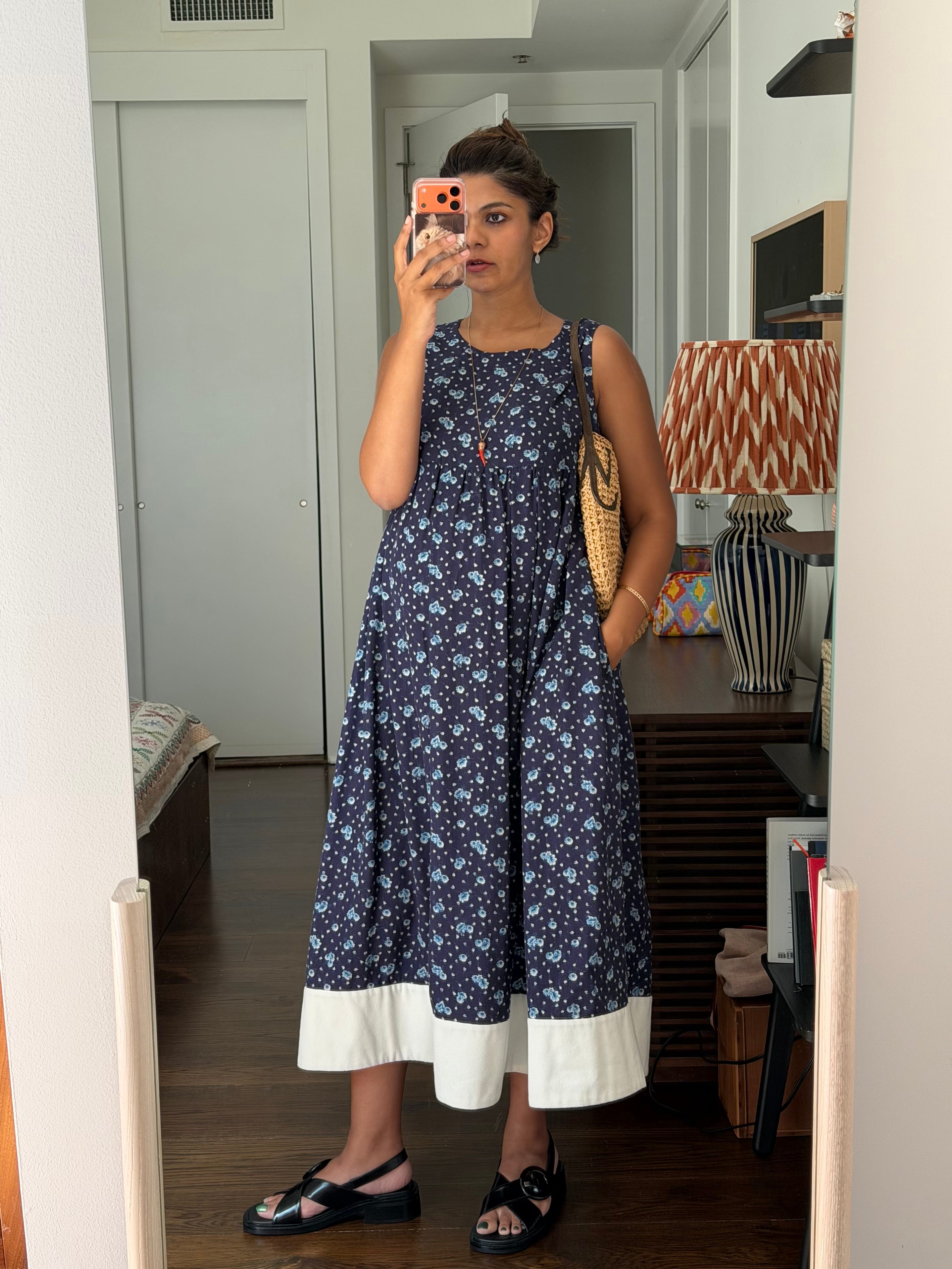
This cavernous dress reminds me of maxis, nightdresses worn by pragmatic South Asian aunties – they know how to do summer right! The body is made from lyocell, which is ever so light, breathable, and moisture-wicking, and the hem is made from a heavy fleecy-cotton which holds the structure of the dress, instead of it hanging straight down
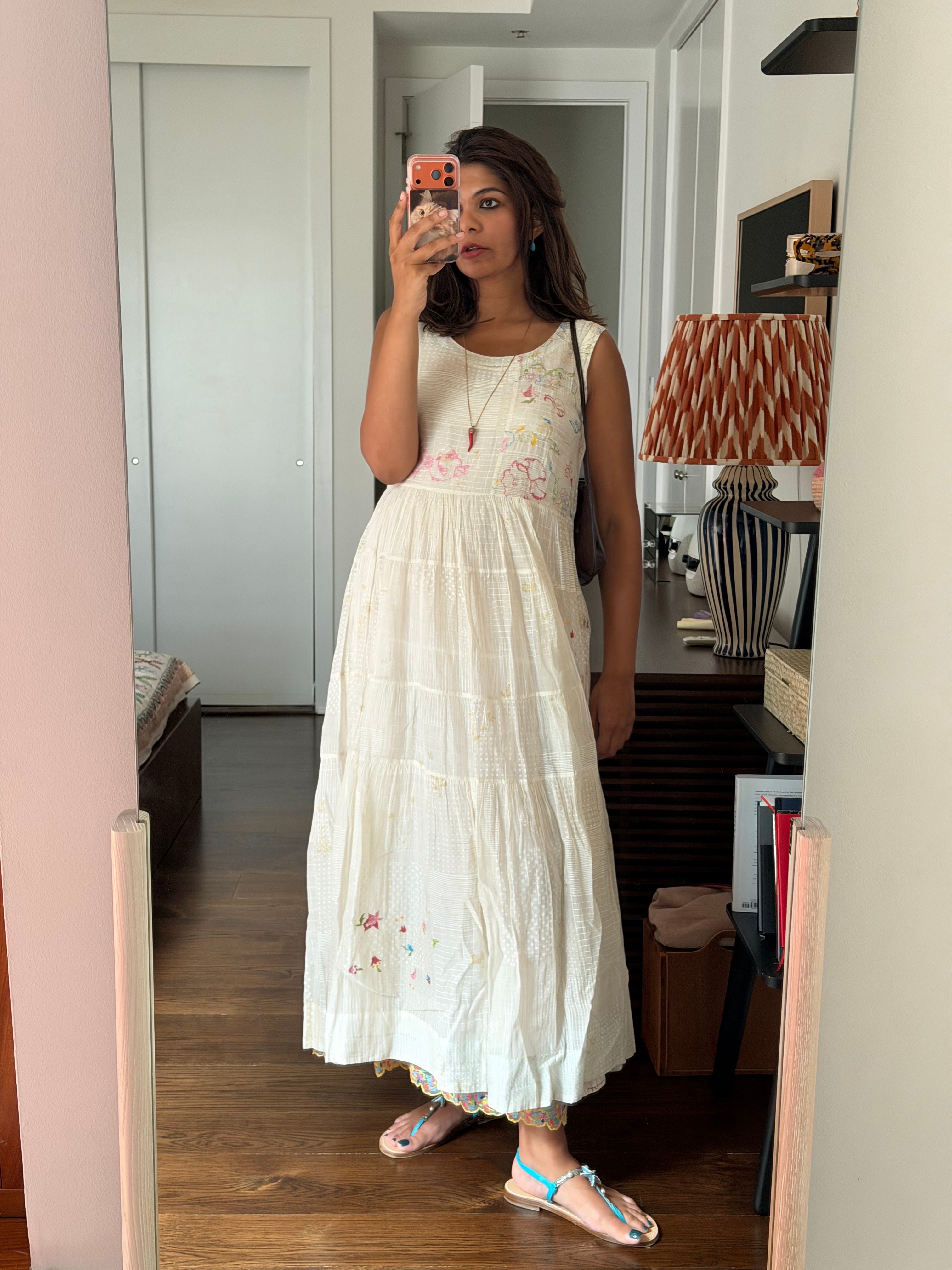
I’ve been a huge admirer of Rina Singh’s Eka for years. The way Rina and her team have grown a conscious fashion brand that is beloved ought to be studied. The brand’s studio is vertically integrated, which means most of their processes take place in-house, from embroidery and block-printing, to packing and shipping, and heritage textiles are sourced from an intimate network across India. I bought my first Eka piece nearly ten years ago, a pink checkered linen dress with 3/4 length sleeves, which has held up beautifully.
This dress cotton-silk dress is from a recent collection, and features the most delicate embroidery and block printing. The slip is a separate piece, and the scalloped muslin hem is intricately embroidered in vibrant colors. The slip was originally shorter than the dress, and after I placed the order, Siddharth, who heads Brand Relationships, sent me a message to ask if I’d like the slip to be made longer so that it would peek out from beneath the dress, both pieces made-to-order. That, for me, was the pinnacle of luxury, and kindness and service most “luxury” brands don’t offer clients.
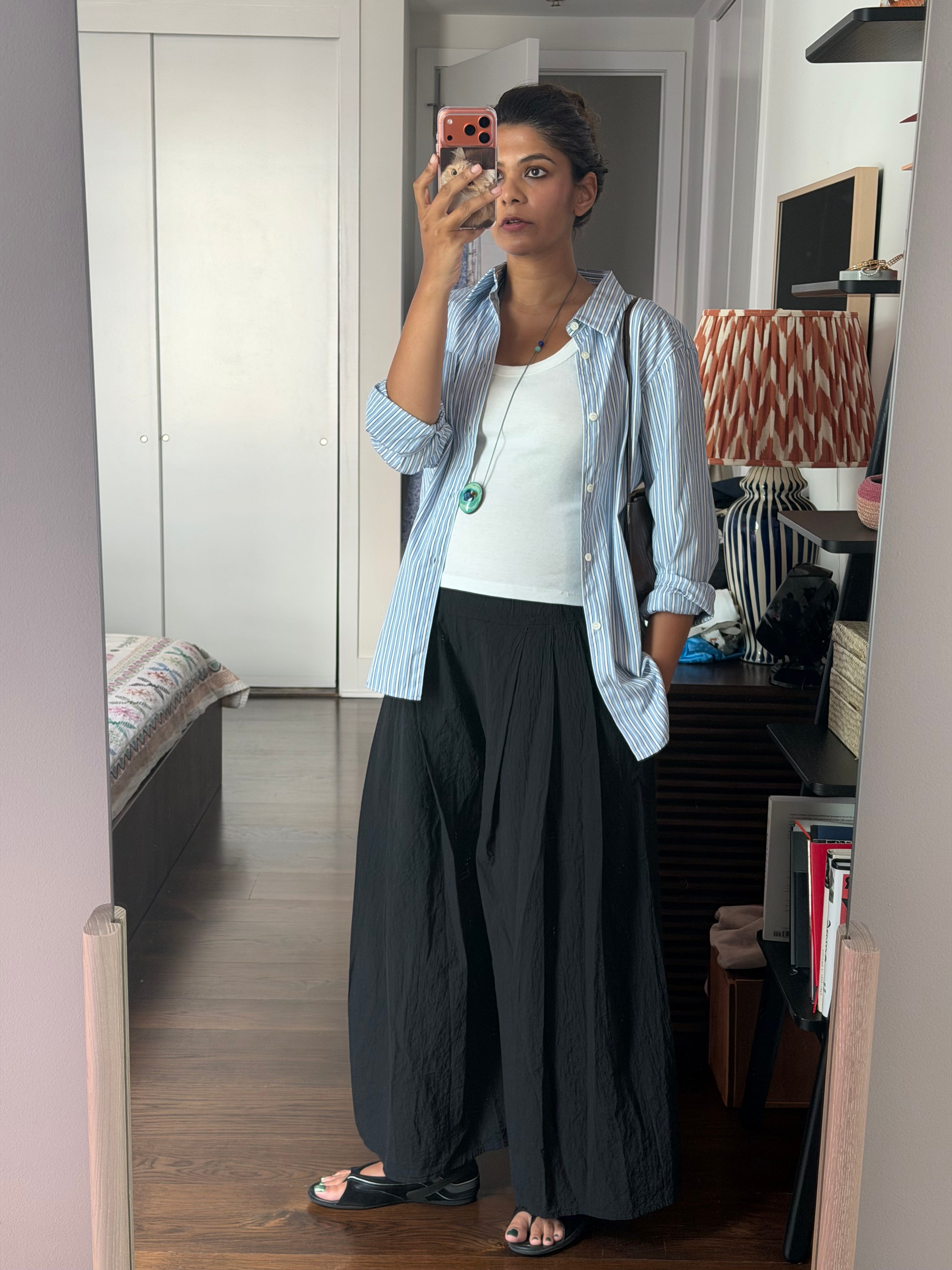
These enormous trousers actually fit over my belly without squishing baby or me; I’ve found wider elastic waistbands to be comfortable throughout pregnancy than barely-there ones that tend to dig into the skin. One year when I was visiting my grandparents in Dhaka after moving, my grandmother was aghast to find that I’d only brought jeans and heavy canvas trousers (all the rage at the time) to wear, and the very next day she went out to the local market and bought me a pair of black culottes, not unlike these trousers.
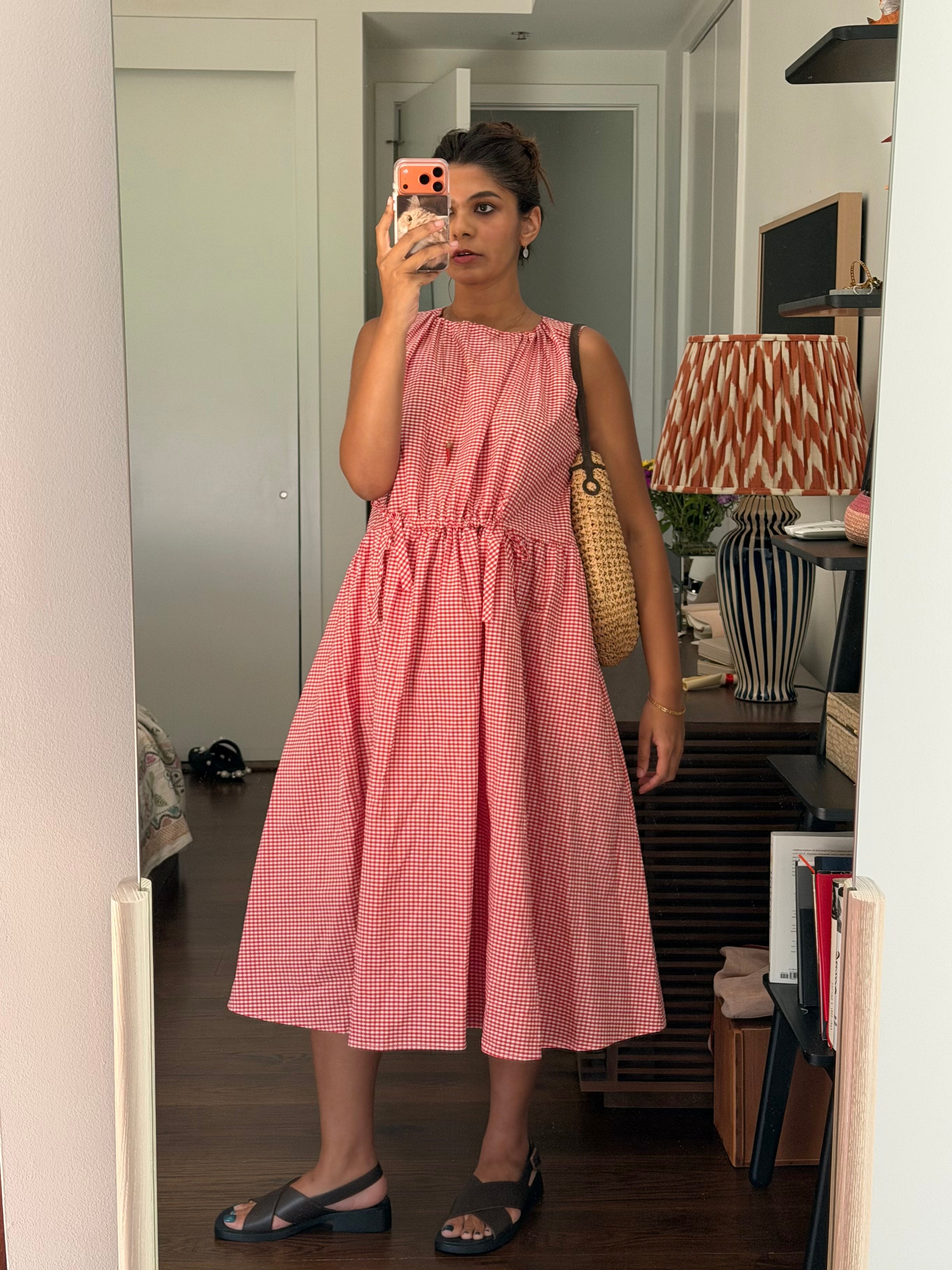
I wore this two days in a row for a day of Doing Things Outside and kept considerably cool. The dress has adjustable ties at the waist and at the back of the neck, and is so capacious when unfastened, that it will get me through to the end of my pregnancy, without a shadow of a doubt.
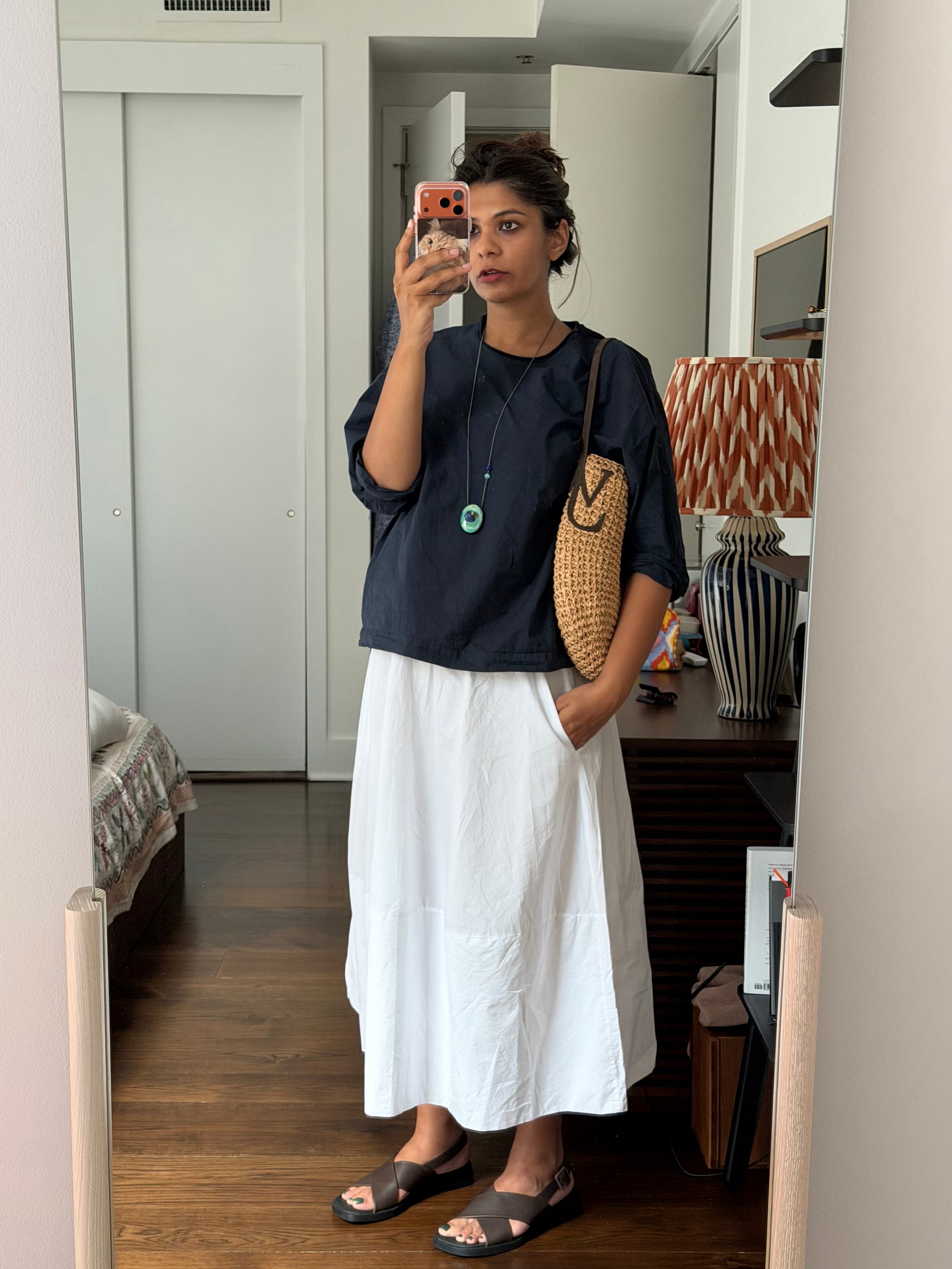
The skirt has a similarly wide elastic waistband like the trousers above, and I can wear it high up on my belly or low down on my hips. The top is so voluminous and light, I could be having triplets and no one would know, and I wouldn’t break a sweat. I bought the top and the trousers above from the Labo.Art store in Milan, and was overwhelmed by the variety of colors and styles; I now regret not buying some of the cool lemon-yellow pieces. If you should find yourself in Milan, be sure to visit their shop.
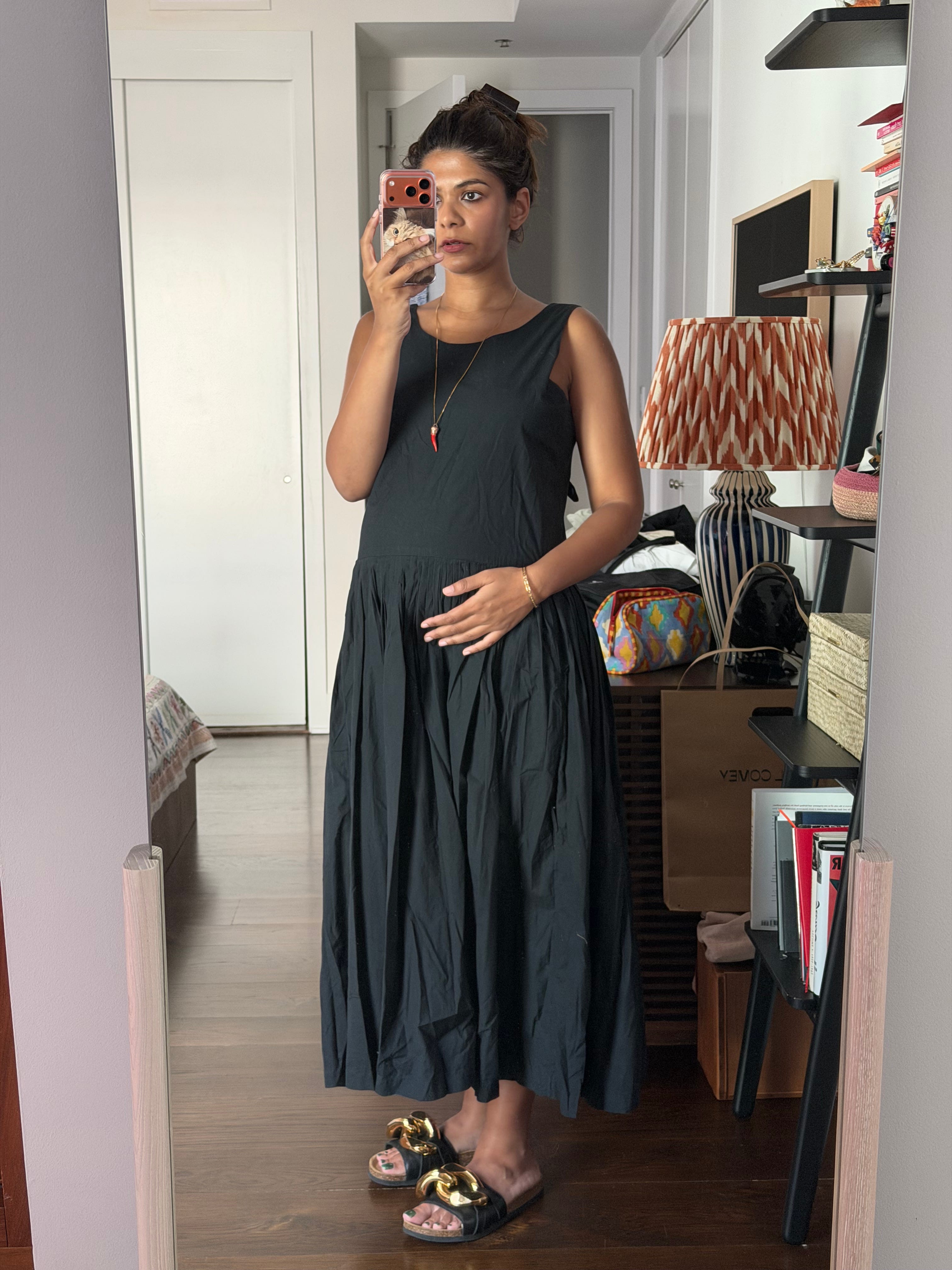
For the past four summers and counting, I’ve leaned heavily on this Sara Lanzi dress, especially when it gets too hot to even think. There are ties in the back that can be adjusted, which means I’m very much still wearing it, and it has deep pockets on each side, perfect for stashing snacks and my trusty fan.
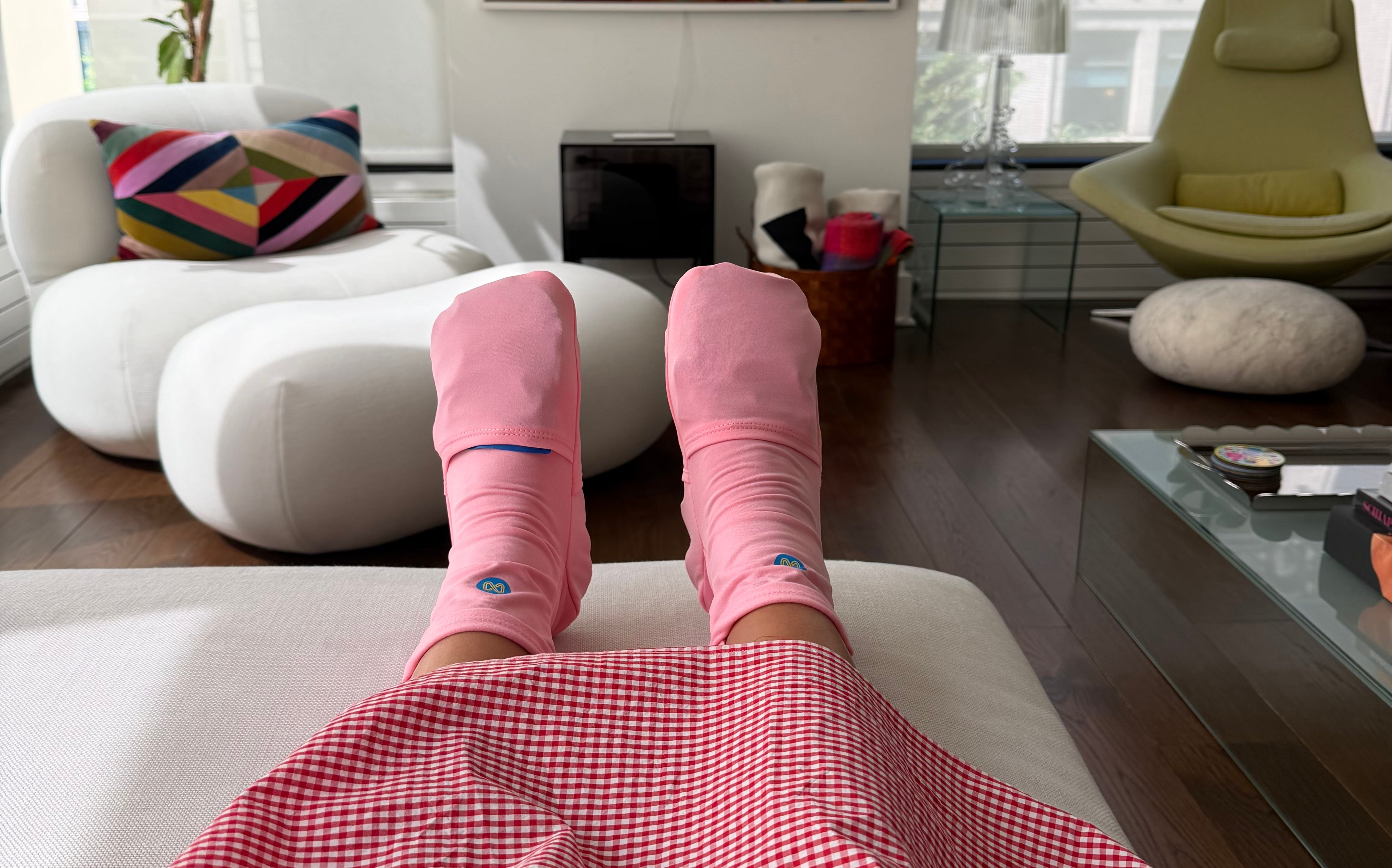
I bought two dresses from Runaway Bicycle based on your reco and just received them. They're beautifully made and I cannot wait to wear them.
Hi! So inspired by your looks ✨Is your JW Anderson raffia bag the small or XL version?